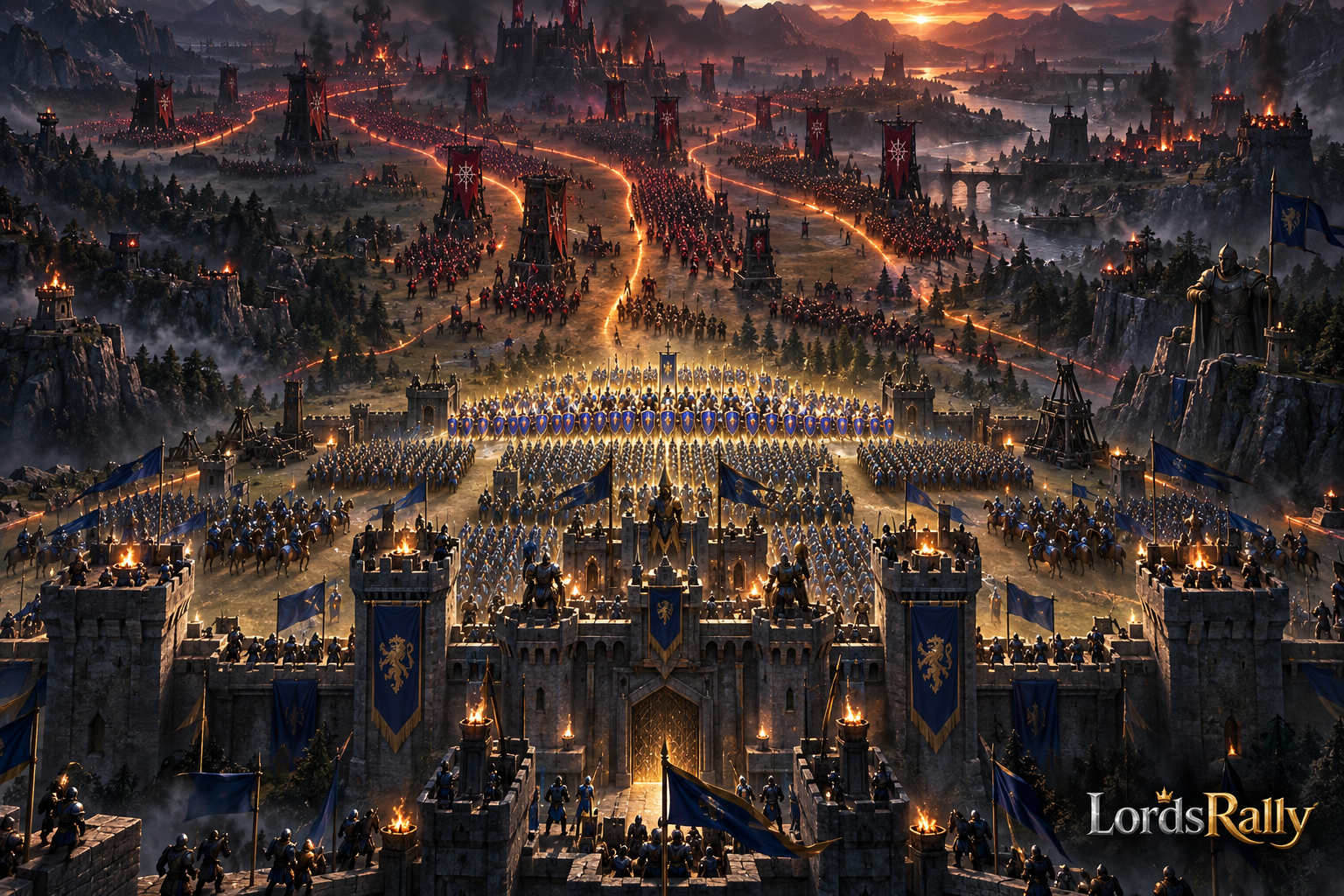
 Formation & Tactics
The Right Formation for Lords Mobile Rally Defense: How to Hold Your Castle with the Right Frontline
When a rally locks onto your castle, panic-swapping gear, requesting random reinforcements, or relying only on your might is usually the most expensive mistake. In Lords Mobile rally defense, the real question is: What is the enemy’s main damage type, and do I have a frontline in my castle that can counter it?
The right formation will not stop the enemy attack by itself. However, it places your most durable troop type in front of the hit and lets the troops behind it deal damage for longer. Especially against rallies built heavily around one troop type, this difference can mean the gap between burning and holding your castle.
This guide explains which information to read first when a rally is incoming, why you should choose a specific frontline, and how to manage guild reinforcements.
Look at the Rally’s Main Type Before Its Might
High might does not mean high defense. A player’s might comes from research, buildings, troops, and other progression. Against a rally, the information you need is which troop type is dealing the attack’s main damage.
The basic counter cycle is clear:
- Infantry counters ranged.
- Ranged counters cavalry.
- Cavalry counters infantry.
For this reason, if you know the enemy is sending an infantry-heavy rally, you should consider a cavalry frontline for defense. An infantry frontline is a more logical starting point against a ranged-heavy rally, while a ranged frontline is the basic answer against a cavalry-heavy rally.
However, the key word here is heavy. Not every rally consists entirely of one troop type. Some attackers use mixed marches, different formations, or misleading gear to break the defender’s habits. Do not choose your formation based only on the opponent’s visible might or guild tag.
Whenever possible, assess scout reports, previous battle reports, and the target’s historical attacking habits together. To learn which scout details can truly change your decision, also see the guide to reading !scout reports correctly.
Frontline Logic: Your Most Numerous Troop Type Is Not Always the Right One
The most common defensive mistake is thinking, “I have the most infantry in my castle, so infantry should go in front.” Troop count matters, but it should not make the decision alone. The enemy’s primary attack type determines which troop type you need to counter with.
Consider this example:
- You have a high number of infantry in your castle.
- The opponent is sending a ranged-heavy rally.
- Since infantry counters ranged, an infantry frontline makes sense.
But in another scenario, you may still have plenty of infantry while the opponent arrives with a cavalry-heavy rally. Putting infantry in front is not a good idea in that case. Cavalry has the advantage over infantry. Switching to a ranged frontline may be the better defensive choice even if you have fewer ranged troops.
The goal on the formation screen is not to select the “coolest formation.” The goal is to prepare the formation that puts your chosen troop type in front. Instead of randomly switching between phalanx and wedge options, answer these three questions first:
- What is the enemy’s main attack type?
- Do I have enough of the troop type that counters it inside the castle?
- Are a significant number of these troops gathering on tiles, stationed in camps, or sheltered?
Remember: troops gathering on tiles, waiting in camps, or placed in shelters do not form your castle’s defensive frontline in the same way. Before changing formation, check how many troops can actually participate in castle defense.
A 60-Second Defense Routine When a Rally Is Incoming
When you see a rally alert, do not try to do everything at once. If you follow a fixed priority order, you can give cleaner information to your guild even if you are not R4 or R5.
First step: Confirm the rally timer and attacker. Looking at the wrong target or interpreting an old report wastes the most valuable seconds.
Second step: Identify the main troop type. A scout report, a previous battle report, or the attacker’s known rally habit helps here. If you do not have reliable information, do not act as if you have a certain counter formation. In uncertainty, shielding is safer than taking a rally with the wrong frontline.
Third step: Lock your formation. If the enemy’s main damage is ranged, use an infantry frontline; if it is cavalry, use a ranged frontline; if it is infantry, use a cavalry frontline. Instead of changing formations repeatedly in the final seconds, make your decision and hold the defensive line.
Fourth step: Request reinforcements by troop type. A call saying only “send reinforcements” is incomplete. Use a clear request such as “Ranged rally, infantry reinforcements needed.” Guild members then know what to send, and weak troop types are not piled into the castle against the enemy’s attack.
Fifth step: Check your leader and defense setup. Whether your leader is in the castle, your defensive gear, and active buffs are all part of the battle. It is safer to standardize these checks before war periods rather than after the rally has begun.
Receiving the rally alert early makes this routine easier to execute. LordsRally can send a rally event to your WhatsApp or Telegram group within 1–3 seconds of the event occurring, but the notification alone is not defense. The real difference comes from your guild already knowing which formation to switch to when the alert arrives. You can review notification options on the features page and relevant commands in the commands section.
Reinforcement Management: The Right Troop Type Is More Valuable Than the Wrong Numbers
In rally defense, reinforcements do not automatically make the castle stronger. Reinforcements of the wrong type or sent without coordination can disrupt your defensive composition. For this reason, a defensive call should always include two details:
- The enemy’s expected main troop type
- The counter troop type requested
For example, if you selected a ranged frontline against a cavalry-heavy attack, it makes sense to request “ranged reinforcements” from the guild. However, if you already have very few ranged troops in the castle and most incoming troops are different types, your selected frontline may not have enough depth to absorb the hit.
The goal is not only to increase troop count. It is to extend how long the frontline can hold. If the frontline collapses early, the troops behind it become targets much faster. Divide your defense plan into three categories:
- Main defensive type: The troop type that counters the enemy’s main attack and will stand in front.
- Support types: Troops that contribute damage but do not change the frontline decision.
- Risky troops: Troops that are weak against the enemy’s main type and can increase losses if sent in large numbers.
This structure makes R4 reinforcement calls clearer, especially in war-focused guilds. Creating a standard message template before war significantly reduces chaos during a rally.
Wedge or Phalanx? Get the Core Decision Right First
Wedge formations offer more advanced options depending on your research and account progression. However, it is a mistake to assign too much importance to the formation shape itself. In rally defense, the first decision remains the same: Which troop type will stand on the frontline?
A phalanx makes the frontline decision easier and clearer to apply. If you use wedge, you should have tested which troop type your selected formation places in front before battle. Trying wedge for the first time when a live rally is incoming is not a defense plan; it is a gamble.
A practical approach is:
- Review battle reports during normal days.
- Run tests and share reports with guild members.
- Set a ready defensive formation for each main attack type.
- During a rally, switch only to the option you determined beforehand.
You can also use gear signals to estimate the enemy’s formation, but gear alone is not conclusive proof. For more detail, read the guide to understanding whether an opponent is set for defense or offense through gear.
Win the Defense Before the Battle Starts: Build a Guild Protocol
Good defense is not built when the rally march begins. It is built when the guild protocol is prepared. Every active war guild should clearly establish at least these four rules:
- The person who sees the rally alert posts the attacker and timer in the group.
- The defender states the main troop type or clearly states that the type is uncertain.
- R4/R5 announces the reinforcement type to send in one sentence.
- Formation, leader, and gear checks are kept ready before battle.
With this protocol, everyone follows one plan instead of giving different advice at the same time. For more target analysis, defense, and Kingdom vs Kingdom content, follow the blog archive.
Frequently Asked Questions
Which formation should be selected for rally defense?
You should select the formation that puts the troop type countering the enemy’s main troop type on the frontline: cavalry against infantry, ranged against cavalry, and infantry against ranged are the basic counters.
Can a high-might castle defend every rally?
No. Might alone does not show troop distribution, frontline durability, leader status, or defensive preparation. Troop composition and the correct formation are more meaningful for defense.
If the rally type is unknown, should I change formation or shield?
If you do not have certain information and your defense plan is not ready, shielding is the safer decision. Choosing the wrong frontline can cause unnecessary troop losses, especially against a strong rally.
If you want to organize rally alerts, target tracking, and kingdom intelligence for your guild, explore LordsRally features and view available tools on the commands page.
Готовы попробовать бота?
НачатьКомментарии (0)
Комментариев пока нет. Будьте первым!